
Why Colombia's Newest Megastructure Is Engineered Like a Luxury Yacht
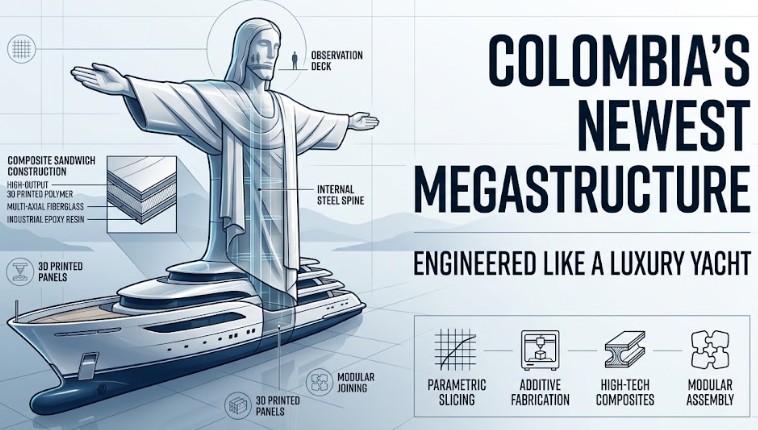
For nearly a century, monumental sculpture followed a predictable script. Builders quarried massive stone blocks, built heavy timber scaffolding, or poured thousands of tons of reinforced concrete. When workers completed Rio de Janeiro's Christ the Redeemer in 1931, they relied on soapstone tiles placed over rigid concrete ribs. It was an impressive feat for its era, but it was also heavy, rigid, and susceptible to the slow decay of mountain weather.
In the hills of El Peñol, Colombia, a very different structure is taking shape. Rising 86 meters above the surrounding reservoir, the Cristo del Embalse project is abandoning heavy masonry in favor of advanced digital fabrication. By combining high-output 3D printing with composite materials used in luxury shipbuilding, the engineering team is turning digital models directly into a structural reality.
Rethinking the Scale of Monumental Statues
Standing 86 meters from its foundation to the top of its head, the complete installation includes a multi-level base building shaped like a cross, topped by a 59-meter sculptural figure. The head alone measures 10 meters in height, roughly equivalent to a three-story building.
Attempting to cast a figure of this size in solid concrete on an Andean ridge presents severe structural and logistical hurdles. Solid concrete carries immense dead weight. That weight demands massive foundations, complicates seismic safety calculations, and requires constant heavy truck traffic along narrow mountain roads. Concrete is also prone to micro-cracks over time, allowing water to seep inside, reach the internal steel rebar, and cause structural spalling.
To solve these problems, the project shifted from traditional civil masonry to naval and aerospace material science. Instead of relying on a solid block of stone or concrete, the statue uses a lightweight, hollow structural shell attached to an internal steel skeleton.
Borrowing Material Science from Shipbuilding
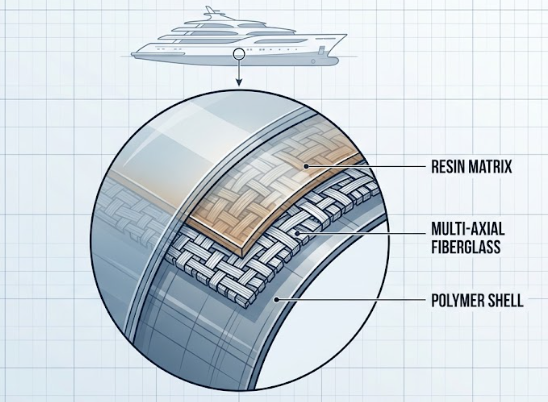
The outer surface of the monument relies on the same materials that allow modern luxury yachts to endure open ocean conditions. The outer skin is composed of high-performance polymer shells reinforced with multi-axial fiberglass and industrial epoxy resins.
This composite build offers distinct mechanical advantages over traditional construction materials:
- High strength-to-weight ratio: the composite skin provides extreme tensile strength while weighing a fraction of standard precast concrete panels.
- Resistance to environmental wear: marine-grade gel coats and UV inhibitors protect the underlying polymers from intense ultraviolet radiation and rapid temperature shifts.
- Total moisture barrier: polymer-resin composites do not absorb water, eliminating the internal corrosion risks that degrade steel-reinforced concrete over decades.
From Digital Slices to Physical Shells: The 3D Printing Pipeline
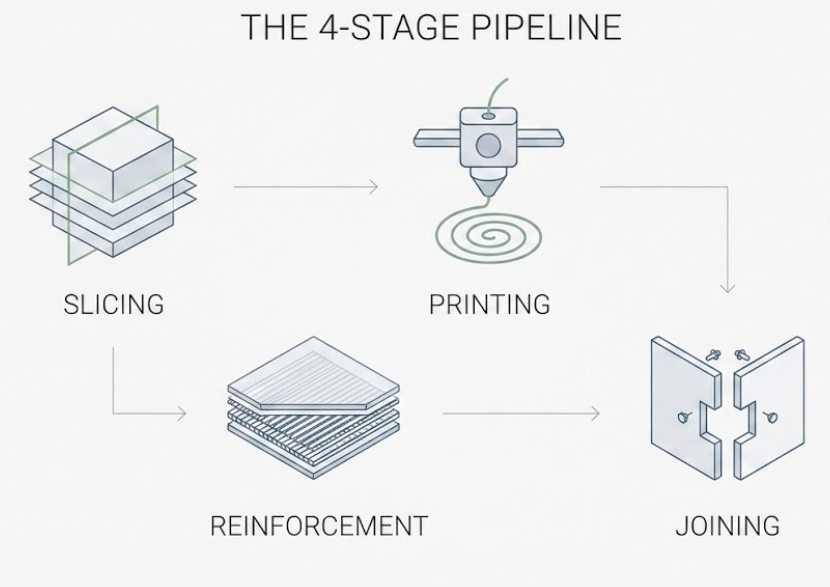
The fabrication process starts entirely in software before a single machine begins running. Sculptors and industrial designers create a high-resolution 3D digital model of the figure. That digital model is then subdivided into thousands of interlocking modular panels.
1. Parametric slicing
Industrial software cuts the digital mesh into precise segments designed to fit within the build volume of specialized 3D printers.
2. Continuous print production
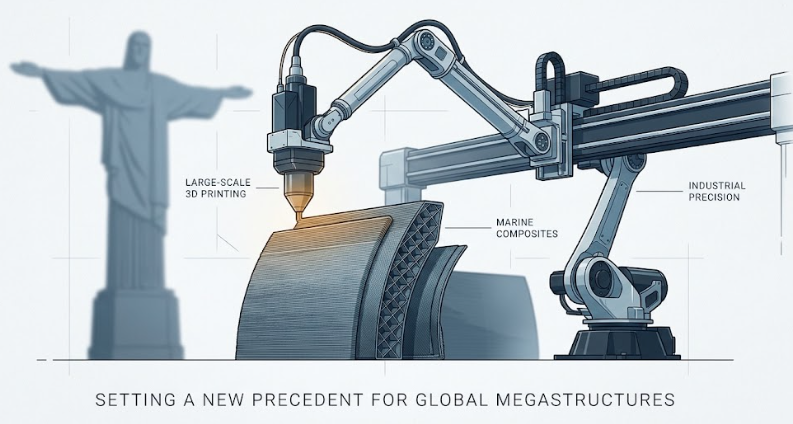
Large-scale printer farms run continuously in a dedicated fabrication hangar in El Peñol, extruding structural polymer filaments layer by layer to form each panel.
3. Composite reinforcement
Once the polymer base panels exit the printers, technicians apply layers of woven fiberglass cloth and structural resin across the interior and exterior surfaces, creating a rigid composite sandwich.
4. Modular joining
The finished panels are transported to the assembly floor, where they interlock using mechanical fasteners and chemical bonding agents to form complete anatomical sections.
Steel Spines and Valley Wind Resistance
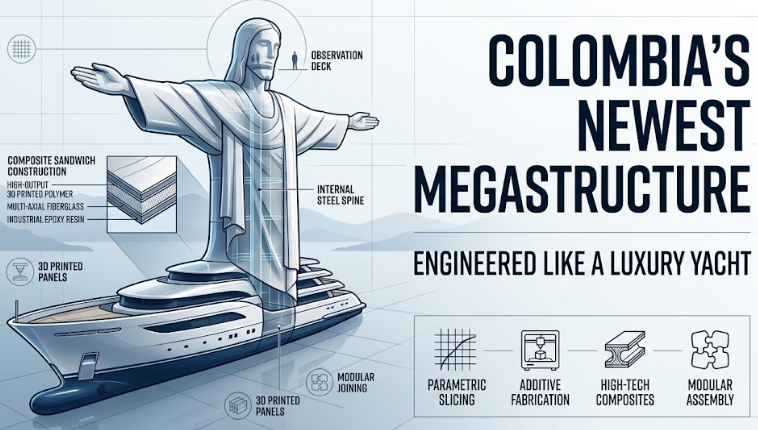
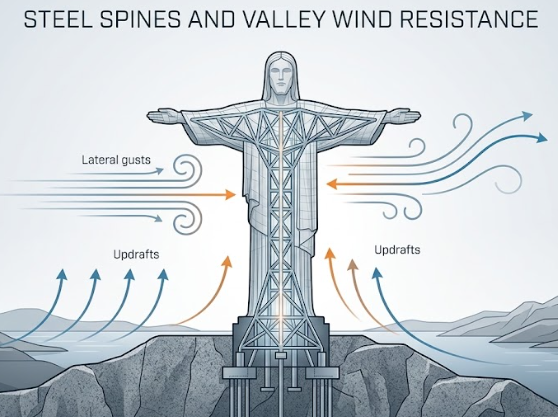
A composite skin cannot stand on its own against mountain weather. Inside the hollow figure sits a structural steel space-frame anchored deep into the granite bedrock of the site.
This internal steel spine acts as the primary load-bearing system, carrying both the dead weight of the installation and the dynamic forces generated by regional winds. Because the statue overlooks a wide body of water surrounded by irregular hills, wind patterns can shift rapidly, creating strong updrafts and lateral gusts.
Engineers used computational fluid dynamics software to simulate how high-velocity winds move across the sculpted robes and outstretched arms. The natural contours of the figure help deflect oncoming air, while the internal steel framework transfers lateral wind shear down into the foundation without placing destructive strain on the composite panels.
Inside the Titan: Elevators and the Crown Observation Deck
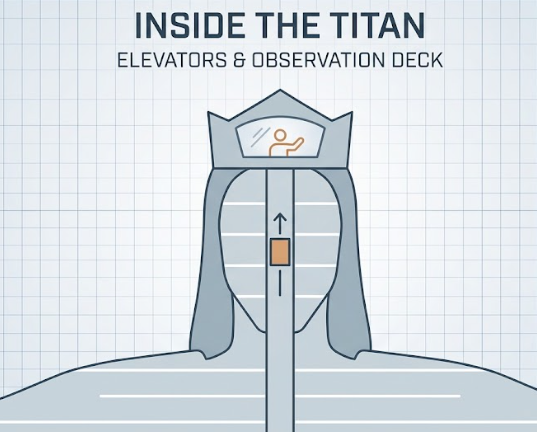
The hollow nature of the design creates usable interior volume across dozens of levels. Rather than being an inaccessible solid monolith, the interior functions as an active public facility.
Visitors will enter through the lower cross structure, which houses exhibition spaces, ticketing hubs, and mechanical rooms. From the base, a high-capacity vertical elevator travels straight up through the center of the structural spine.
The elevator brings passengers to a viewing corridor located in the chest and shoulders of the figure. Above that level, an enclosed observation platform inside the 10-meter head provides visitors with panoramic sightlines across the reservoir, the surrounding terrain, and the distant outline of the rock of Guatapé. Structural glass floors along key sections of the horizontal crossbeam allow guests to look straight down through the structure.
Additive manufacturing has moved beyond small prototypes and hobbyist workshops, claiming its place as a practical method for building some of the largest structures in the world.
Setting a New Precedent for Global Megastructures
The construction of large public monuments has historically been slow, resource-heavy, and dangerous for site workers. By using digital fabrication and lightweight composite materials, the team behind the Cristo del Embalse is demonstrating that mega-scale art can be manufactured with industrial precision in a controlled environment.
As the assembly continues in El Peñol, the project offers a clear look at how 3D printing and marine engineering can collaborate outside their traditional fields.
Writer
Justin is a travel enthusiast and Colombian local interested in promoting existing tour operators' businesses and improving travel quality for foreigners visiting the country.
Related articles
 Construction Updates
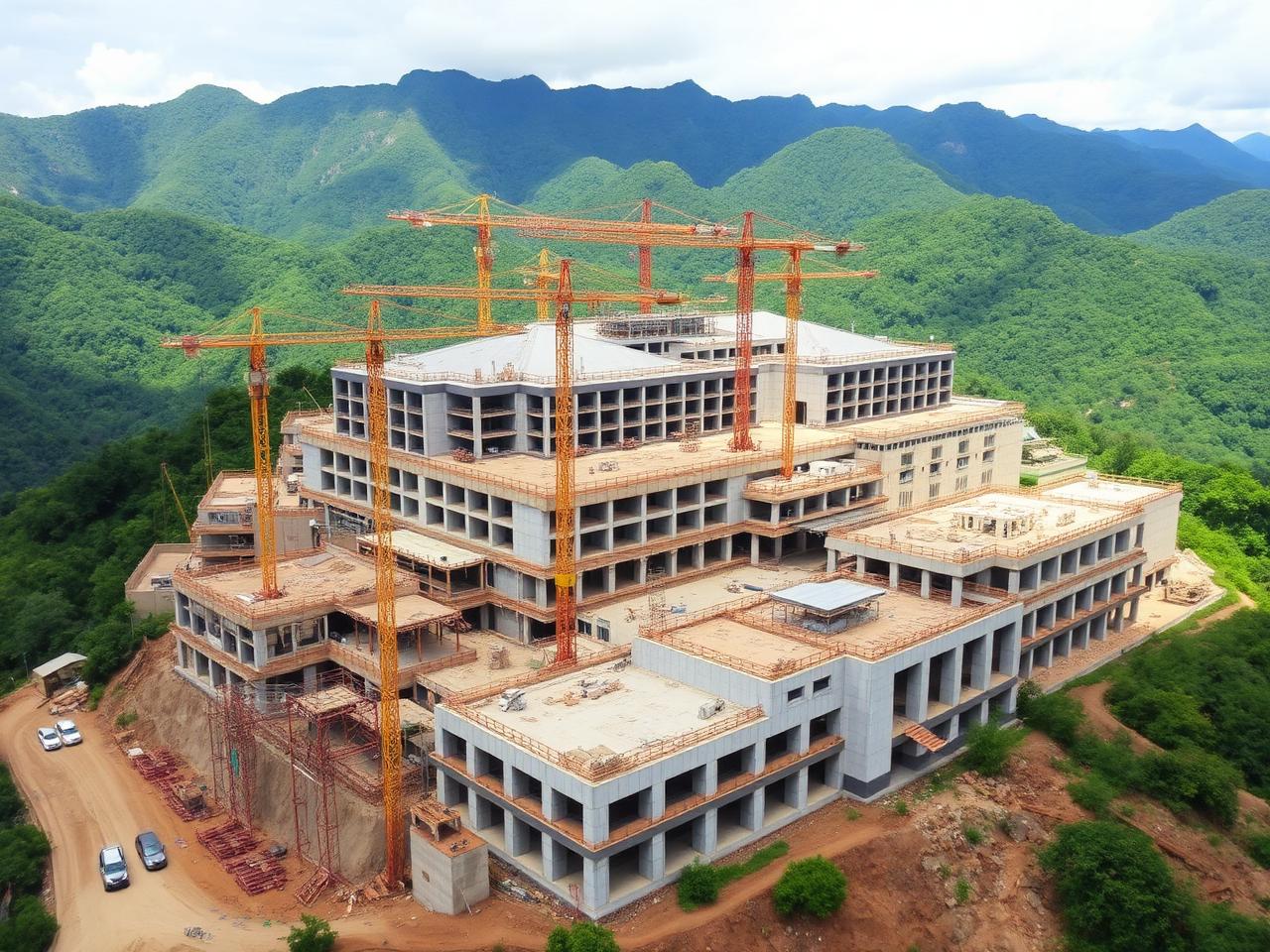
Montecielo Mall Reaches Structural Topping-Out on 76 Commercial Locales
Crews closed the last slab on the commercial deck this month, keeping the 76-locale mall on track for its January 2027 opening.
Read article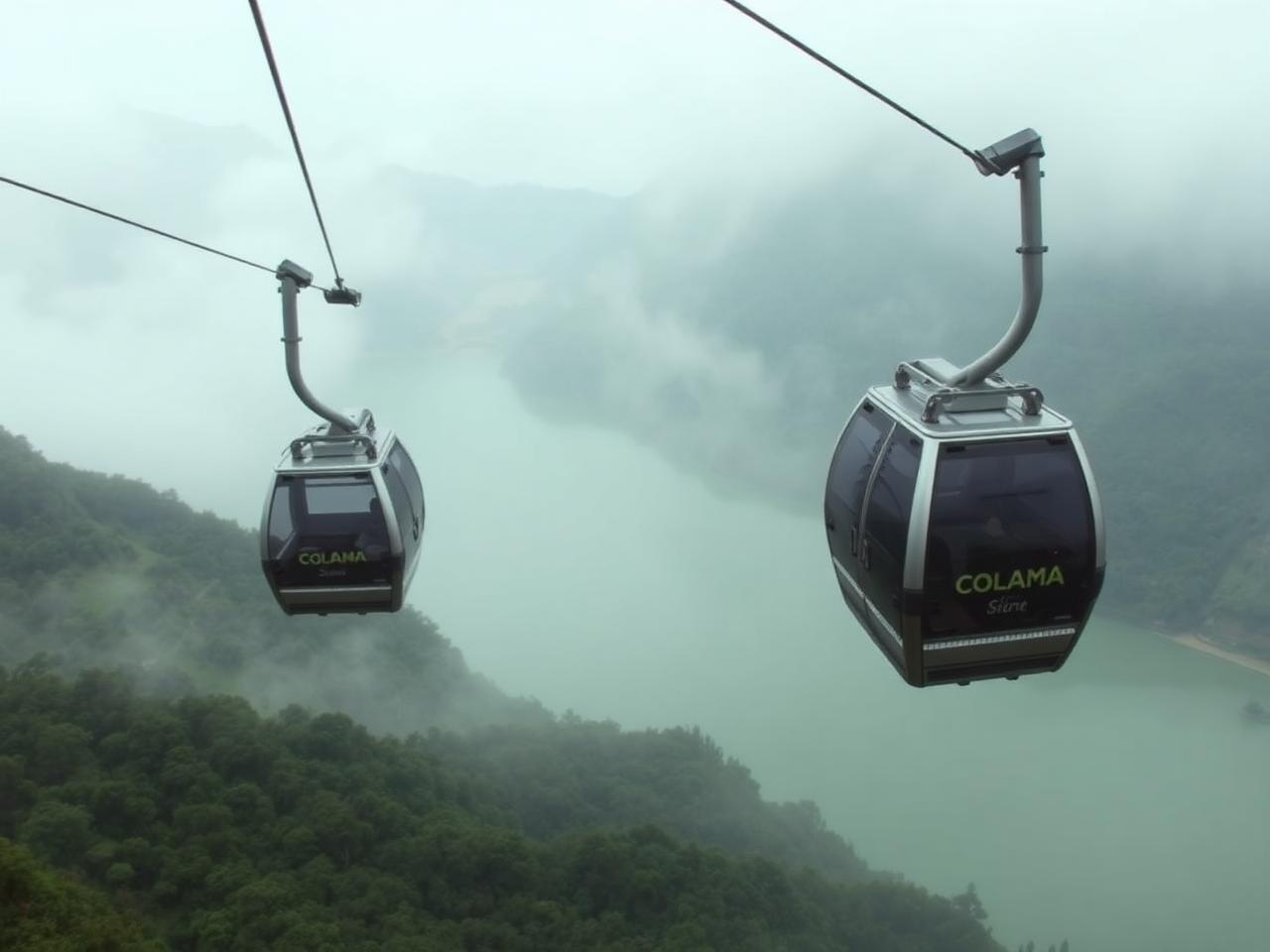 Construction Updates
Inside the 1.2 km Panoramic Cable Car Planned for December 2027
Two stations, a single span over open water, and a cabin ride that reframes the monument from the middle of the reservoir.
Read article Travel Guides
How Quiet Reservoir Mornings Improve a Hangar Visit at Cristo del Embalse
Quiet reservoir mornings make the Hangar visit calmer. Learn timing tips, tracker checks, and how to plan Cristo del Embalse without midday Guatapé crowds.
Read article