

You do not have to wait until the full Cristo del Embalse rises on the ridge to have a real encounter with the project. Between El Peñol and Guatapé, on the reservoir shoreline in Antioquia, Colombia, Phase 1 already puts the finished statue head on public display at ground level inside The Hangar. This guide is for travelers who want that close look now, while the 86-meter monument, the Montecielo complex, and the panoramic cable car are still moving through later phases.
This site is an independent editorial guide, not affiliated with the project developers or the Municipality of El Peñol. Dates, dimensions, and progress figures on the project are preliminary and subject to change. Always confirm exhibition access and last-mile details before you leave Medellín.
What You Can See at The Hangar Right Now
According to the project’s public Overview, Phase 1 (The Hangar and statue head exhibition) is complete and open to the public. The already-built head of the planned 86-meter resurrected Christ sculpture sits at ground level inside The Hangar. It is the only place you can stand beneath that finished form today.
That is the practical reason people visit Cristo del Embalse Hangar before the full assembly is done. On the ridge, the completed figure will read as a distant skyline landmark. In The Hangar, you meet the head at human scale, under a roof, with construction still audible nearby. Hours, any entry fees, and on-the-day access rules are not published here as fixed facts. Confirm them on-site or through current local and official channels when you plan the stop.
Where the Hangar Sits in the Bigger Project
The Hangar is not a side attraction. It is Phase 1 of a multi-phase master plan that also includes Montecielo, a cable car, and the full monument. As reported on the project tracker, overall completion sits near 47 percent, weighted across four phases and subject to change as work advances.
Montecielo mall and eco-resort (in progress)
Montecielo covers roughly 58 hectares of mixed-use ground along the reservoir. Phase 2 centers on a commercial mall with 76 locales plus an eco-resort in progress. The site lists a target mall opening around January 2027. Facades, mechanical work, and tenant fit-outs may still be underway when you visit, so treat that date as provisional and do not expect a finished shopping day-trip until openings are confirmed.
Cable car and full monument (still ahead)
Phase 3 proposes a 1.2 km panoramic cable car linking the Montecielo plaza area to a mirador ridge, with a target opening around December 2027. Phase 4 is full assembly of the 86-meter sculpture on the ridge, with a target window around 2029-2030. Modular sections are described as fabricated off-site; the head you see in The Hangar is already finished. For a phased visual of how those milestones stack, use the site’s Master Plan rather than treating any single render as a final schedule.
How to Get There from Medellín
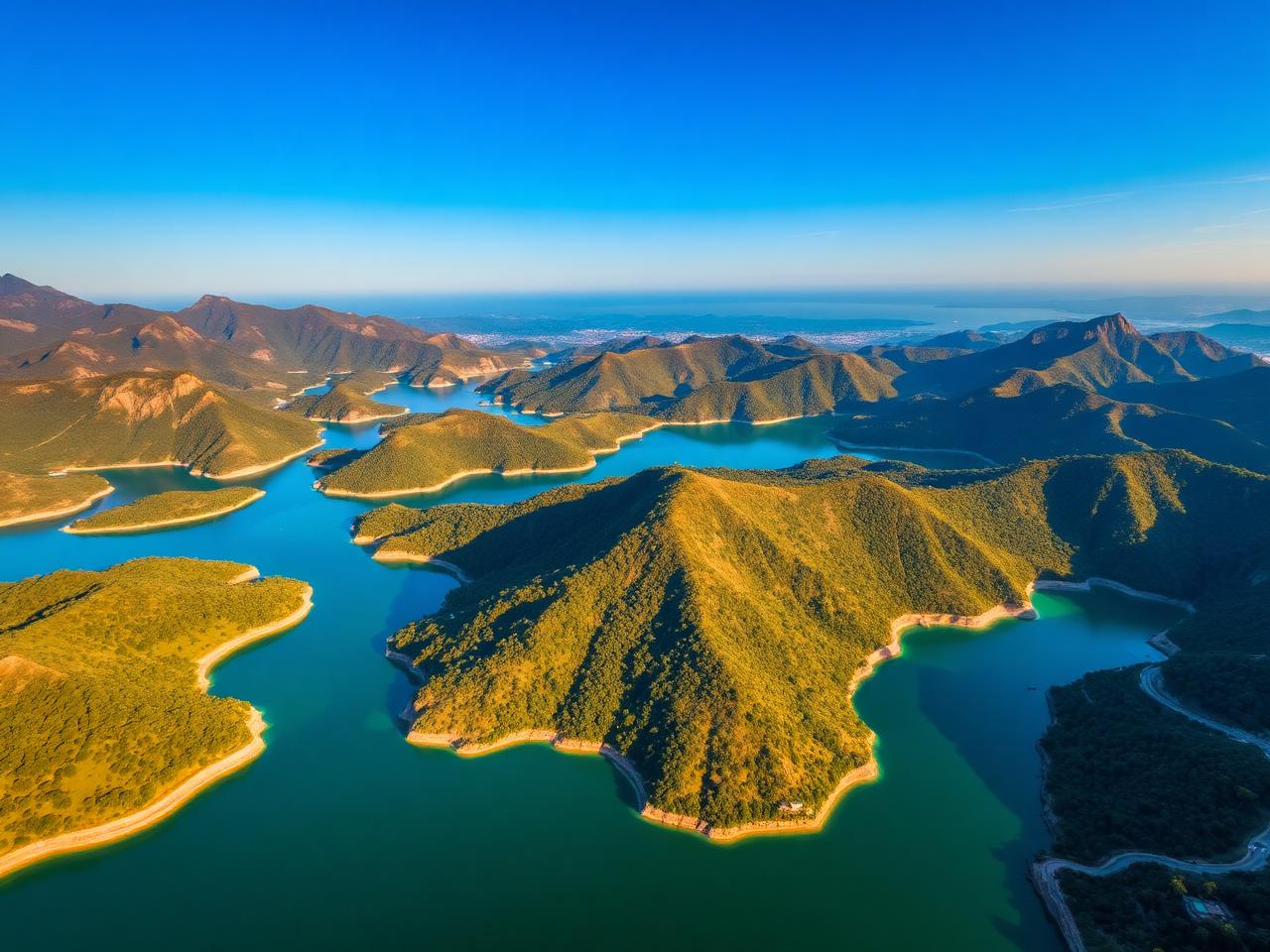
The monument site sits between El Peñol and Guatapé, a short ride from Piedra del Peñol and the shoreline villages. Medellín is the natural staging city for almost every visitor.
Fly into MDE
Fly into José María Córdova International Airport (MDE) in Rionegro, the main gateway for the metropolitan area. From the airport or from Medellín itself, you continue east toward the reservoir corridor by bus, rental car, or private transfer. Build buffer time for traffic leaving the city, especially on weekend mornings when Guatapé day-trippers fill the road.
Bus from Terminal del Norte
Frequent buses leave Medellín’s Terminal del Norte for El Peñol and Guatapé. The ride is about two hours under typical conditions. From either town, tuk-tuks or local transfers usually cover the last stretch toward the site. Ask at the terminal or in town for the current drop-off point closest to The Hangar, because construction access can shift.
Drive or private transfer
Drivers typically allow about 1 hour 45 minutes to 2 hours via the Medellín-Bogotá corridor, then the Guatapé-El Peñol shoreline road (roughly 75 km from Medellín, depending on your start point). Private transfers buy flexibility if you want to combine The Hangar with Piedra del Peñol in one loop. On-site parking is expected as the complex matures; confirm what is open on the day you go rather than assuming a finished lot.
For a broader regional orientation before you book anything, Colombia’s official tourism network covers Guatapé and Piedra del Peñol well. Pair that context with this site’s Travel Info section for monument-specific notes.
Best Time to Visit for Clear Views
The site’s travel guidance highlights December through March and July through August as the clearest seasons for panoramic reservoir and monument views. Those windows also align with popular domestic travel periods, so buses and Guatapé lodgings can fill early. Shoulder and wetter months are still workable if you pack a light rain layer and accept softer light on the water.
Elevation around the reservoir stays cooler than Medellín’s valley floor. Bring a light jacket even in dry months. Because The Hangar is an indoor exhibition space, weather matters less for the head itself and more for how you stitch the stop into an outdoor day. Again, confirm current opening windows before you commit to a tight schedule.
Pair The Hangar with Guatapé and Piedra del Peñol
Most visitors will not make The Hangar their only stop, and they should not. Piedra del Peñol (also called El Peñón de Guatapé) sits nearby as the region’s classic climb, with hundreds of steps and wide views over the reservoir islands. Guatapé’s painted zócalos and waterfront make an easy afternoon after the exhibition. A simple day-trip pattern works well: morning bus or drive from Medellín, Hangar visit, rock or town time, return before dark. If you prefer a slower pace, overnight in Guatapé or El Peñol using existing hotels and fincas while Montecielo’s eco-resort is still under construction.
Use the interactive map under Plan Your Visit to place The Hangar, Montecielo, and the proposed cable car route relative to the shoreline. For more regional reading, the site’s Blog & News hub collects construction updates and travel-oriented pieces you can skim before you go.
What to Confirm Before You Go
Treat this article as orientation, not a ticket counter. Before you leave Medellín, confirm:
- Whether The Hangar exhibition is open on your chosen day
- Any entry fees or timed-entry rules (none are invented here)
- The best last-mile drop-off or parking option that week
- Whether active construction requires detours or restricted zones
Respect barriers and staff guidance. The Hangar sits inside a live build environment. Progress numbers and opening targets will keep moving; if you want milestone alerts later, the homepage tracker and monthly bulletin are enough without turning a travel day into a construction briefing.
Plan Your Visit
If the finished head at ground level is what drew you here, you already have enough reason to go. Use Plan Your Visit for the map, travel corridors, and practical planning tools on this site. See The Hangar now for the close encounter. Come back later, when the mall, cable car, and full 86-meter figure (all still provisional on today’s timeline) rewrite the skyline. Either way, start with a confirmed route from Medellín and a clear morning on the reservoir road.
Writer
Justin is a travel enthusiast and Colombian local interested in promoting existing tour operators' businesses and improving travel quality for foreigners visiting the country.
Related articles
 Travel Guides
The Complete Day Trip: Medellín to the Cristo del Embalse and Back
Timings, transport options, what is open now, and how to combine the monument with Guatapé and the Piedra del Peñol.
Read article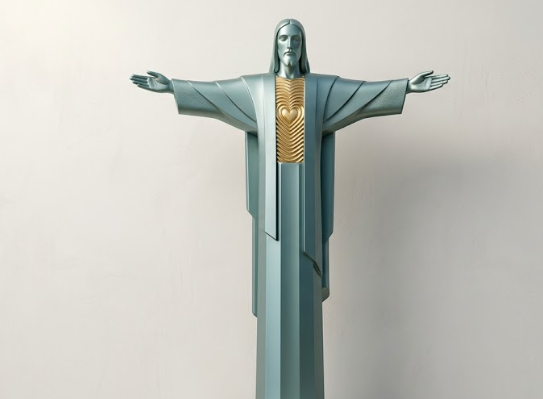 Montecielo News
Can a Megamonument Reinvent Guatapé's Overtourism?
Guatapé and El Peñol are drowning in day-trippers. Can the 86-meter Cristo del Embalse and the Montecielo complex turn a quick photo stop into an overnight economy?
Read article Construction Updates
Why Colombia's Newest Megastructure Is Engineered Like a Luxury Yacht
Instead of quarried stone or poured concrete, the 86-meter Cristo del Embalse uses high-output 3D printing, marine-grade composites, and a steel spine anchored into Andean bedrock.
Read article